


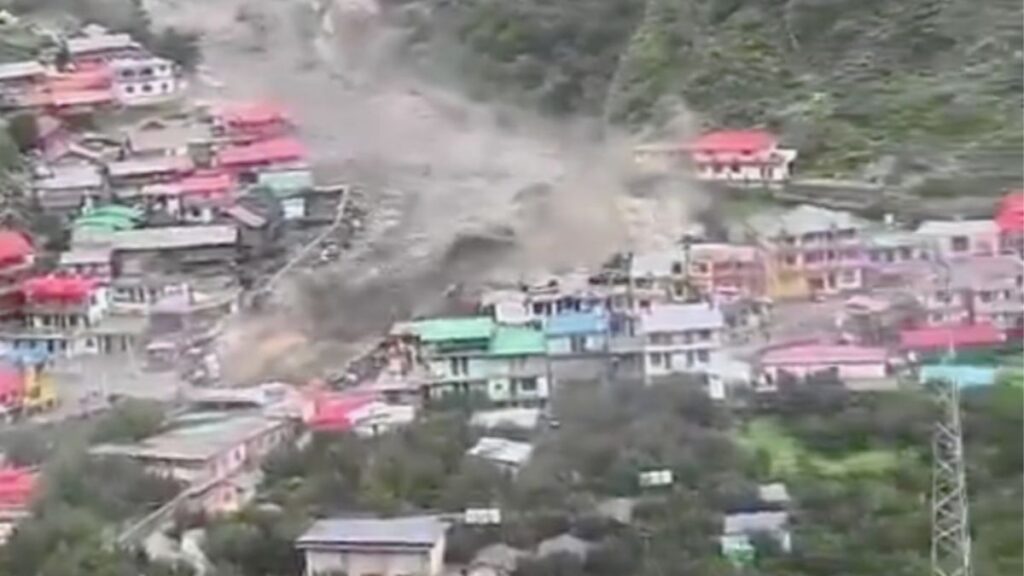
Uttarkashi Cloudburst 2025: It was around 12:30 AM on August 5 when a loud, unnatural roar woke the residents of Dharali, a small apple-farming village just off the road to Gangotri. Locals say it sounded like “the sky tearing open.”
Most thought it was thunder. But within minutes, a cloudburst over the Kheer Ganga catchment turned the gentle Bhagirathi tributary into a monster, crashing through homes, fields, and lives.
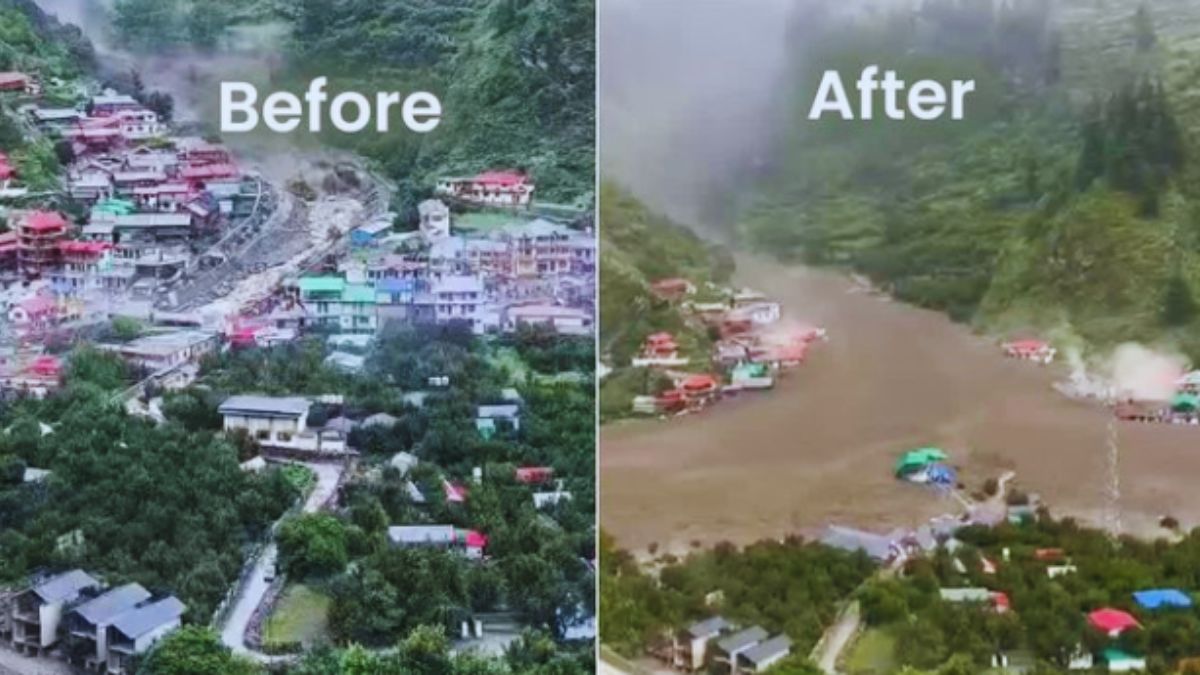
By morning, the village was gone. Not damaged-gone.
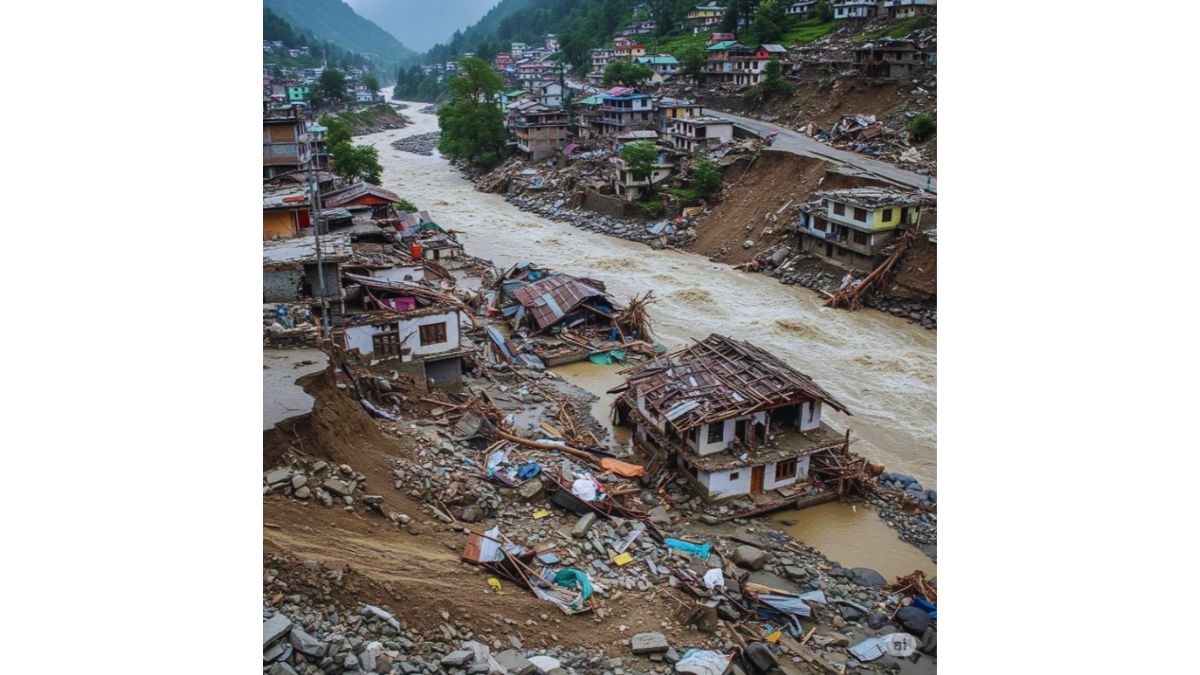
What was once a postcard-perfect Himalayan hamlet, dotted with wooden homestays and apple trees, now looks like a battlefield of broken wood, mangled roofs, and endless mud.
#उत्तराखंड : #उत्तरकाशी के धराली गांव के ऊपर बादल फटा। बादल फटने से धारली गांव चपेट में आया।
60 लोगों के लापता होने की सूचना।#UTTRAKHAND #Uttarakhand #UTTARKASHI #उत्तरकाशी pic.twitter.com/SBcmRji93h— Ulta Chasma Uc (@ultachasmauc) August 5, 2025
From Apple Orchards to Aftermath: A Place I Once Knew
I had visited Dharali in 2023, during apple season. I remember a boy named Karan, around 12 years old, who ran after my car to give me a small bag of green apples. His father ran a chai shop overlooking the river, where locals gathered every evening.
That spot is now just a flat stretch of mud and boulders.
The river, once calm and clear, is a dark, angry channel, still carrying debris and the occasional shattered piece of someone’s home.

Also Read: Pithoragarh Road Accident: 8 Killed as Jeep Plunges Into Gorge in Uttarakhand
Human Cost of the Uttarkashi Cloudburst 2025
As of August 6, 2025:
- 4 people have been confirmed dead
- Over 100 missing, including 11 army personnel from the Ibex Brigade
- 40–50 homes and 20+ homestays destroyed or severely damaged
- Roads to Gangotri and nearby Sukhi are completely cut off
Survivors are in shock.
“I don’t remember how I escaped,” said Suresh Negi, a shopkeeper I had met on a previous trip. “There was no time. We just ran. Everything else — gone.”
His voice broke when he mentioned that his 9-year-old niece is still missing.
Rescue & Relief After Uttarkashi Cloudburst 2025
Rescue operations are underway, led by the Army, NDRF, SDRF, and ITBP. But rain and damaged terrain are slowing progress.
Still, there’s hope.
- 130+ villagers have been evacuated to safe zones
- Temporary shelters have been set up in Harsil and Bhatwari
- Drones, tracker dogs, and satellite phones are being used to locate the missing
- Helicopters remain on standby for emergency airlifts
The authorities have issued a red alert across the district. Locals are being advised to move to higher ground and avoid riverbanks completely.
Swift & coordinated response by #ITBP and other agencies in #Dharali flash floods: 37 villagers (22 men, 11 women & 4 children) rescued and safely evacuated to ITBP BOP Kopang, where immediate first aid was provided. #Uttarkashi #Uttrakhand
Info. Courtesy @ITBP_official pic.twitter.com/6x92joT4Vz
— BEENA R KHEMANI(ARMY DAUGHTER)🇮🇳 (@BeenaKhemani) August 5, 2025
Why Did This Happen?
Cloudbursts aren’t new in Uttarakhand. But this level of destruction in such a short time? It’s becoming worryingly common.
Experts point to a deadly mix:
- Climate Change: Warmer air holds more moisture, leading to violent, concentrated downpours.
- Unchecked Construction: Hotels, cafes, and roads built too close to rivers reduce natural drainage.
- Deforestation: Fewer trees mean less absorption and more runoff.
“The Himalayas are crying out,” says Dr. Meera Sharma, a climate scientist at the Wadia Institute.
“We’ve built too close, too fast. What used to be a 50-year disaster cycle now feels like an annual occurrence.”
Travel Advisory for Tourists
If you’re planning to visit Uttarkashi or Gangotri:
- Postpone your travel immediately.
- All routes to Gangotri are blocked due to landslides.
- Nearby villages like Sukhi and Harsil are also under watch for possible flooding.
Tourism departments have urged travelers to stay updated only through official sources.
Before and After: Dharali’s Heartbreaking Transformation
What This Means for Uttarakhand’s Future
This disaster is more than a weather event; it’s a wake-up call.
We can’t keep selling the mountains as Instagram dreams without matching them with safe infrastructure, early warning systems, and environment-first policies.
If tourism is to survive in Uttarakhand, we must respect the land on which it depends.
How You Can Help
- Donate to verified funds like the Chief Minister’s Relief Fund, Goonj, or SEEDS India
- Avoid spreading unverified news or videos, as misinformation can delay rescue
- Volunteer only if trained, and with official disaster relief agencies
Final Thoughts
I’ve covered many floods.
I’ve stood in ankle-deep water in Kullu and watched Kedarnath bounce back from tragedy.
But Dharali’s disappearance was like watching a village take its last breath in the middle of the night, with no warning, no goodbye.
The mountains aren’t just landscapes, they’re homes, lives, memories.
And if we keep ignoring their warnings, more villages will vanish, just like Dharali did.